Revenue from a life saving innovation could create many new jobs in Tromsø
Published
May 18, 2026
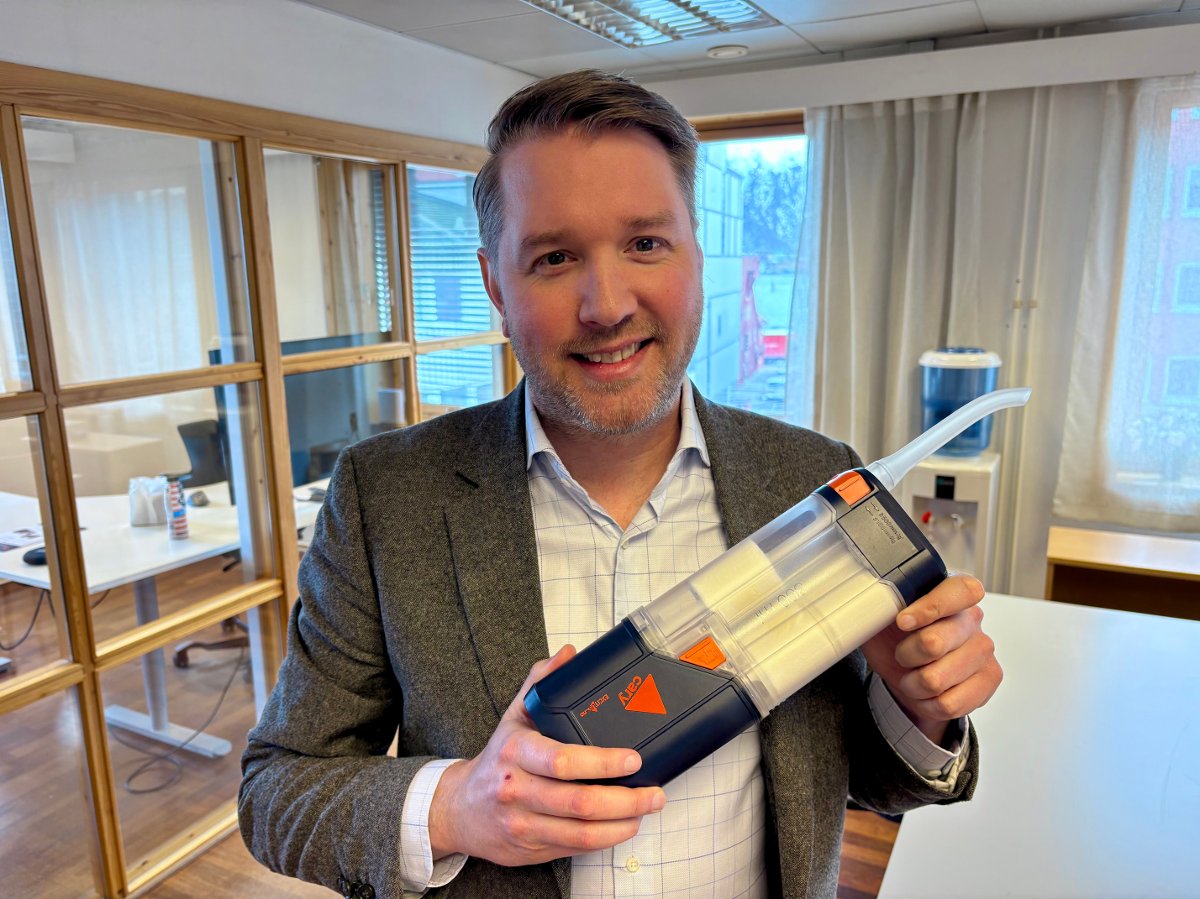
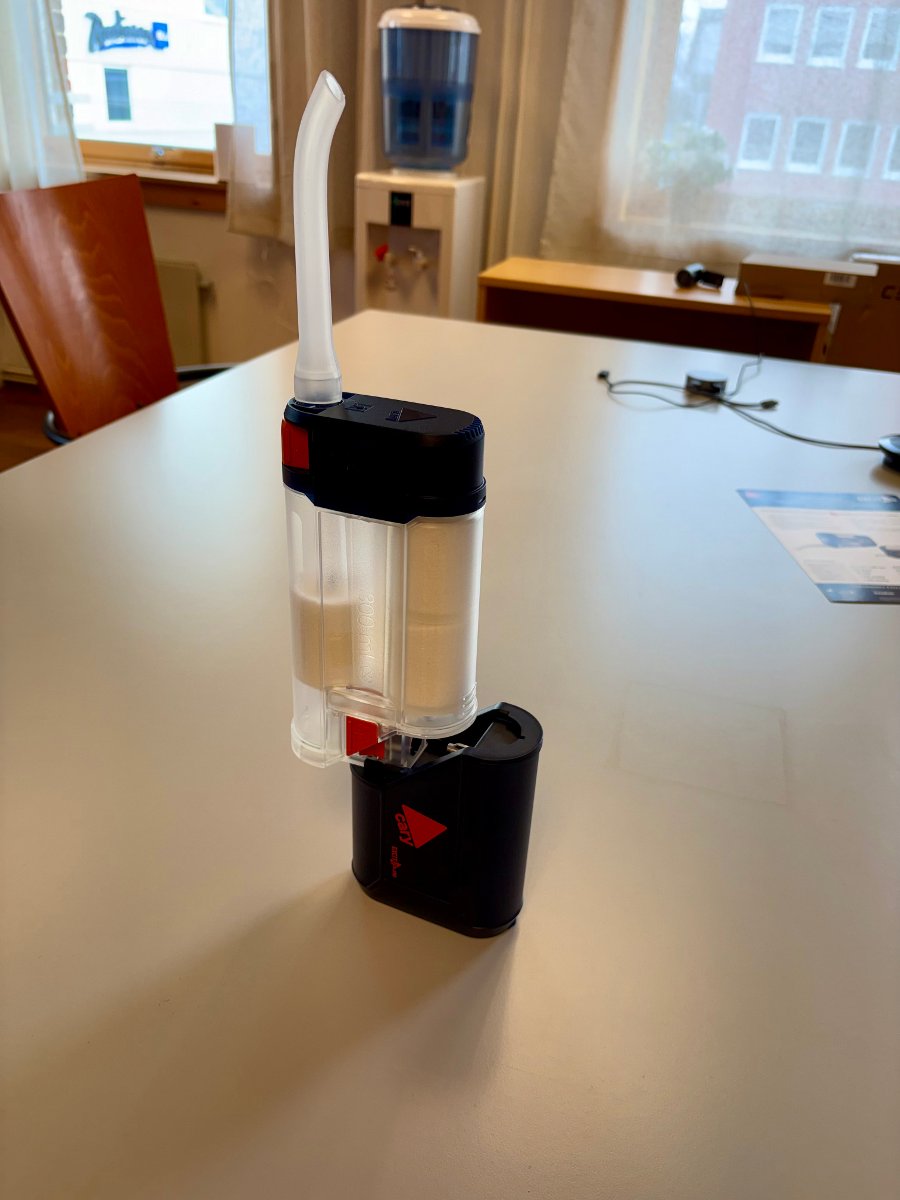
That will be the reality if the Norwegian Ministry of Defence approves Ukraine’s request for the delivery of a large volume of the product CARY, the world’s first handheld, battery‑powered medical suction device.
The device is used to remove fluid that blocks a patient’s airway, such as vomit or blood.
This haspreviously been reported by Forsvarets Forum. Norsk livreddende teknologi kan revolusjonere evakuering i Ukraina
According to the Tromsø‑based company Excitus Medical, which owns the product, Ukraine’s National Guard (NGU) has submitted a formal request to the Ministry of Defence for the delivery of 10,000 units of CARY.
“If this goes through, it will mean that we move from a startup phase into a growth phase. That means we can scale up and hire more people in Tromsø,” says Marius M. Hansen, Chairman of the Board at Excitus Medical.
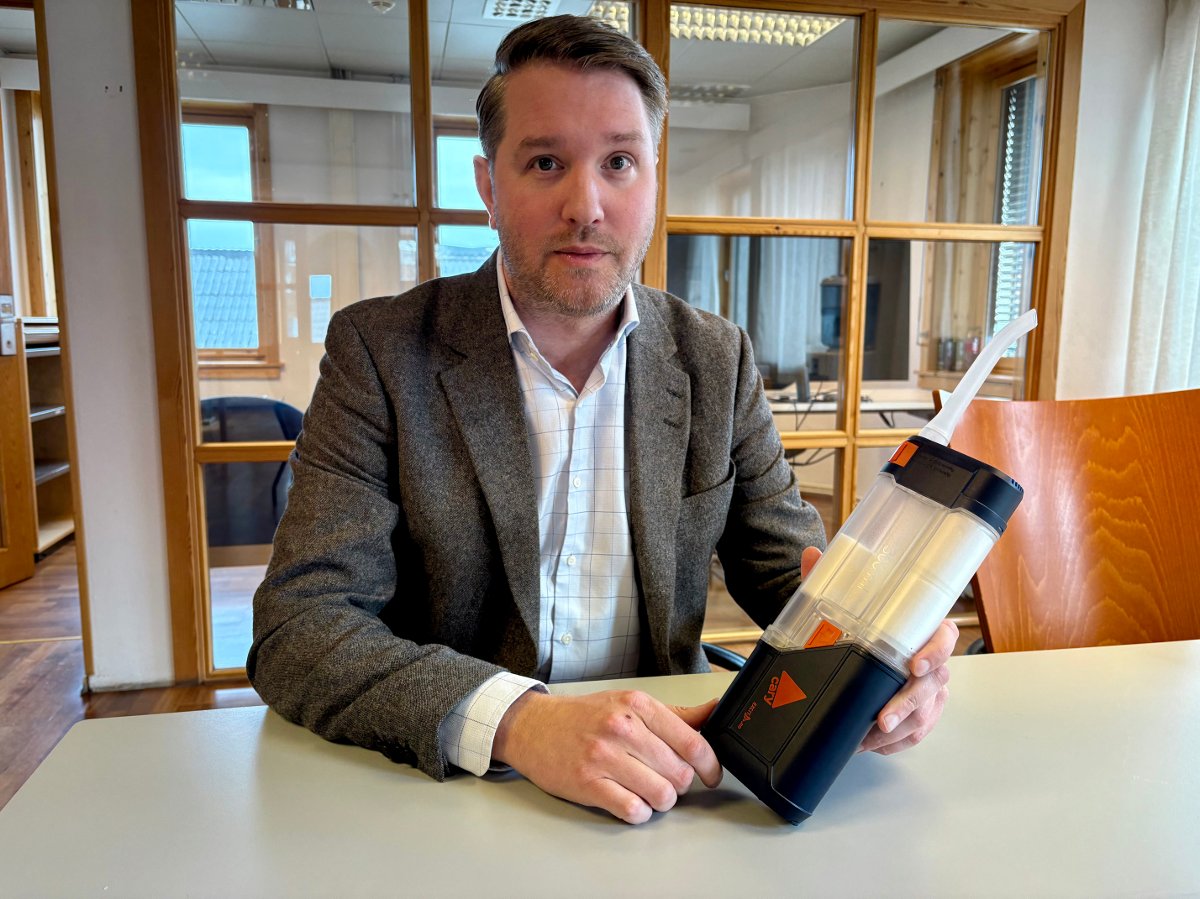
Photo: Torje Dønnestad Johansen
A Norwegian innovation
The product was developed by engineers from Lærdal Medical, one of the world’s leading companies in medical training and treatment equipment. CARY is manufactured just outside Oulu, Finland, by the company’s partner Innokas Medical.
Excitus Medical currently has three full‑time employees and two part‑time employees. A large order of ten thousand units would require additional staff in logistics, back‑office functions, and continued product development at the company’s offices in Tromsø.
“We estimate between 20 and 25 jobs in Tromsø over the next five years,” says Hansen.
Investments of tens of millions
Marius M. Hansen is a co‑owner of the company and the son of majority shareholder Henry M. Hansen, originally from Tennevoll in Troms and now based in Sweden. Henry Hansen built significant wealth after selling Scandinavian Air Ambulance to Avinci Group in 2014.
With his extensive experience in medical technology and suppliers, he immediately saw the product’s potential and invested in Excitus Medical in 2019.
“I won’t say much more beyond the fact that investments total several tens of millions of Norwegian kroner,” says Hansen.
The company was later relocated to Tromsø and has since attracted several North Norwegian investors.
Approved in the United States
CARY has been tested by U.S. Special Forces and received regulatory approval for airway management from U.S. health authorities in 2025. The product is still awaiting European CE certification (Conformité Européenne).
“In April, inspectors will come to Tromsø to complete the final stage of the CE‑marking process, which will allow approval across Europe,” says Hansen.
Long‑term, the ambition is to further develop CARY and certify it for additional medical applications.
Tested in combat
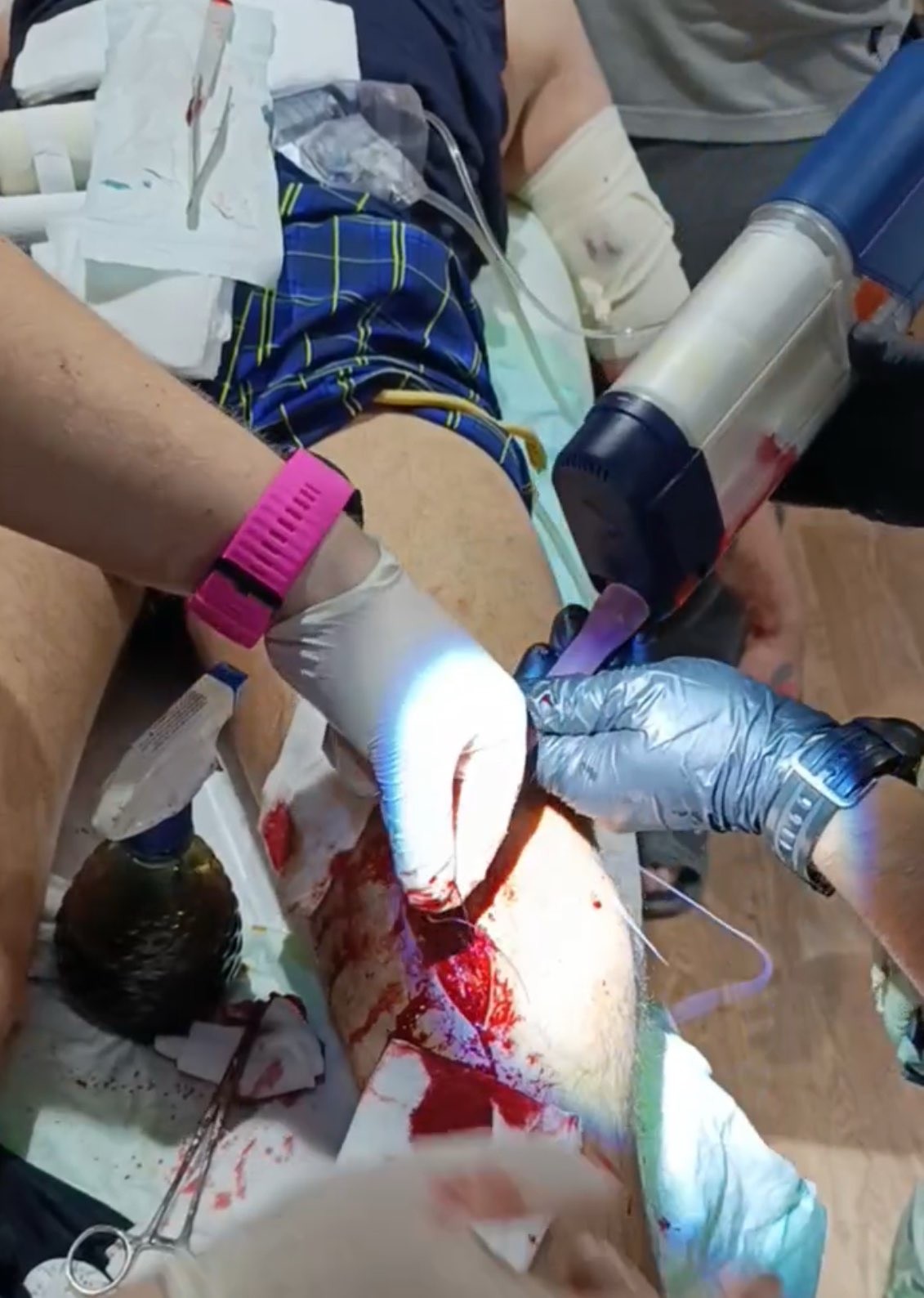
Ukraine needs CARY now. In a wartime situation, formal certification is secondary as long as the device performs effectively. The container can be replaced quickly and easily, and the battery life isapproximately four hours.
Ukrainian special forces units, the 140th Separate Special Operations Regiment and the 8th Special Operations Regiment, have tested Cary in combat and are requesting wide spread deployment.
Modern warfare has changed significantly. Due to drones, wounded soldiers cannot always be evacuated quickly, increasing the need for equipment that helps keep casualties alive longer on the battlefield.
“During NATO operations in Afghanistan, we talked about the ‘golden hour.’ In Ukraine, it has become more like the ‘golden week,’” says Ukrainian combat medic Serhii “Jedi” Rotsjuk.
“Even the prototypes have already saved lives in Ukraine,” says Henry M. Hansen.
Strong market demand
CARY has proven effective in controlling severe bleeding by removing blood from the wound site, allowing medics to identify and stop hemorrhaging.
It can also be used as a suction device for chest injuries, removing air or fluid from around the lungs. While CARY was originally designed for civilian use, the war in Ukraine has demonstrated its vital role in emergency and combat medicine.
“It’s reassuring to know that we’ve created a product that can truly make a difference for human lives,” says Hansen.
Significant revenue potential
Financially, approval of the Ukrainian request could be transformative for Excitus Medical. Each unitis priced at approximately NOK 10,000, resulting in potential revenues of around NOK 100 million.
“We are confident this will be commercially viable. This is just the beginning,” says Henry M. Hansen.
The company sees significant long‑term potential across civil and military markets globally, including emergency medical services, police, fire departments, ambulances, helicopters, and aircraft.
Disclaimer: This text is an English translation generated by AI based on an original article published by Nord24. The translation is provided for informational purposes only and may not fully reflect the nuances of the original Norwegian text.
Original article here: Excitus Medical, Ukraina-krigen | Inntekter til livreddende oppfinnelse kan sørge for mange nye arbeidsplasser i Tromsø